For the past two weeks I have been building a machine that writes travel blog posts for me. I mean full 5,000-word guides with photos from our own trips, internal links, the SEO finished, and Pinterest pins already made, all for about $2 to $3 in AI credits per article. My only job is a 30-minute review at the end before I hit Publish.
This post is the blueprint. The video below shows the whole thing running, but here I want to slow down and hand you the actual system, stage by stage, in plain language you can take straight into Claude Code. I will also give you the five things that broke while I built it, because those cost me more time than all the building combined.
A target only a machine can hit
Quick context first. AI crushed my blogging income back in 2023, and I spent about two years being pissed off about it. Dariece and I own a few travel blogs, and the one I am rebuilding first is Your Irish Adventure, a site we basically left for dead. It has 160 published articles on it today.
The first tool I built was not a writer. It was an audit agent that crawled the site and mapped out every topic the blog would need to cover to be a real authority on Ireland travel. It came back with 8 main topic areas, 96 sub-topic clusters, and a target of roughly 1,750 articles. Nobody writes 1,750 articles by hand. I have run content businesses for over a decade and I would not even try.
I know what you’re thinking, “so you’re just going to mass-publish AI slop!” That is the trap, and it is exactly what I am trying not to do. Plenty of people are pasting a topic into Claude, publishing whatever comes out, and calling it a day. My bar is higher than that: the post has to be able to rank, it has to sound like me, and it has to be built on places we have actually been. The whole pipeline exists to clear that bar.
The pipeline, stage by stage
Here is the entire system on one rail. A topic goes in the top, a finished draft comes out the bottom, and I will break down what each stage really does underneath.
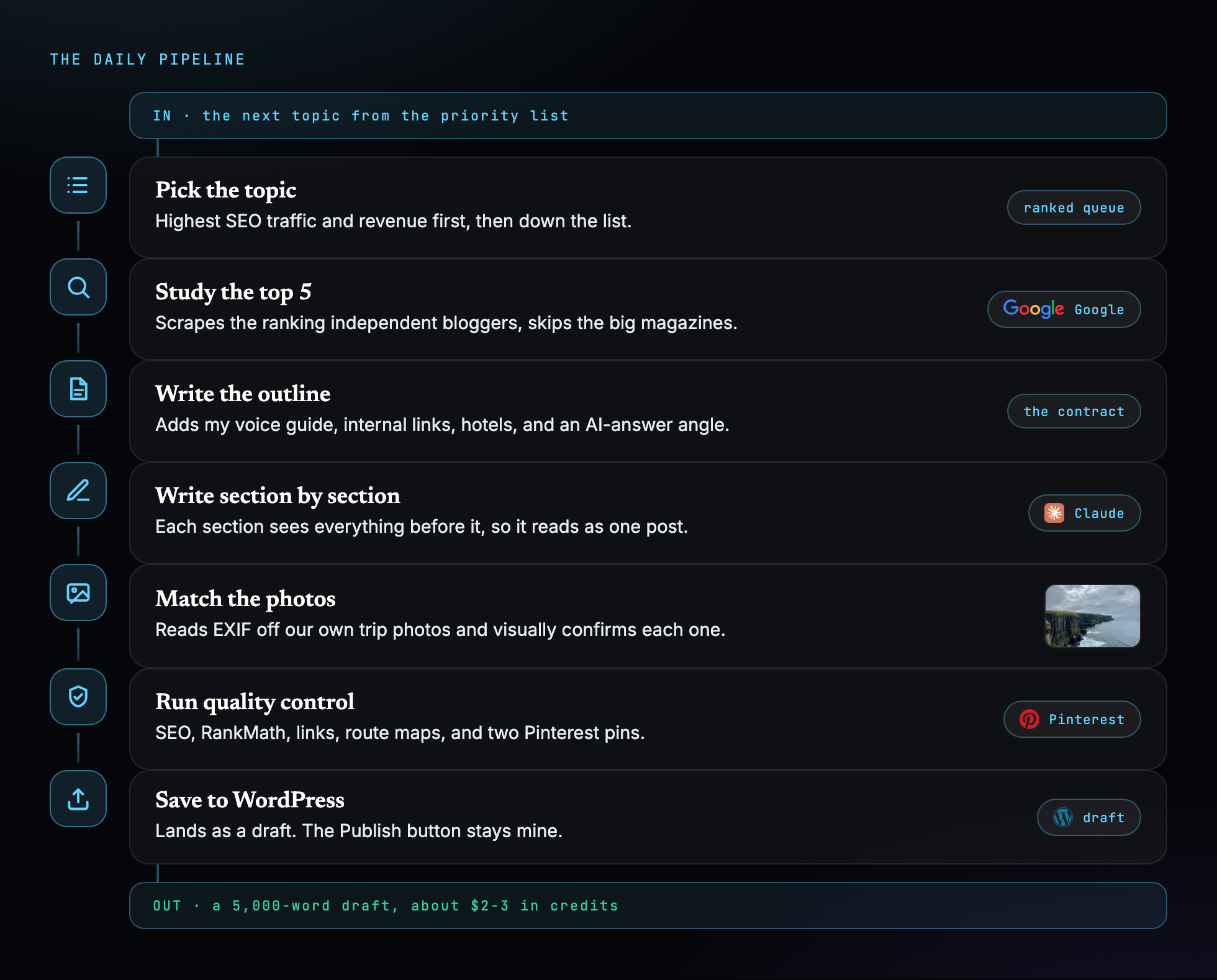
Every day it picks the next article from a priority list, ordered by which topics bring the most search traffic and revenue. Once it has the topic, it searches Google for the top five posts already ranking for that term, strips out the big travel magazines and booking sites, and keeps the best independent bloggers. Those five get studied properly: keywords, average word count, photo count, and every heading, until it has the skeleton of what a winning post looks like.
Then it writes an outline, and this is where most one-prompt setups fall over. My outline stage also pulls in my personal voice guide, a list of existing posts on my site it should link to, which hotels and tours to mention, and an angle that might get the post into Google’s AI answer boxes. The outline is the contract for everything that comes after it.
The writing itself happens section by section, and every section gets the full context of everything written before it. That one decision is why the finished post reads like one person wrote it instead of eight disconnected chunks stapled together.
The part that still feels like a magic trick
The photo stage is the one I am proudest of. I gave the agent every photo from our Ireland trips, and it reads the EXIF data your iPhone stamps on every shot: GPS, timestamps, even the weather that day. Here is exactly how a single photo earns its place in a post.
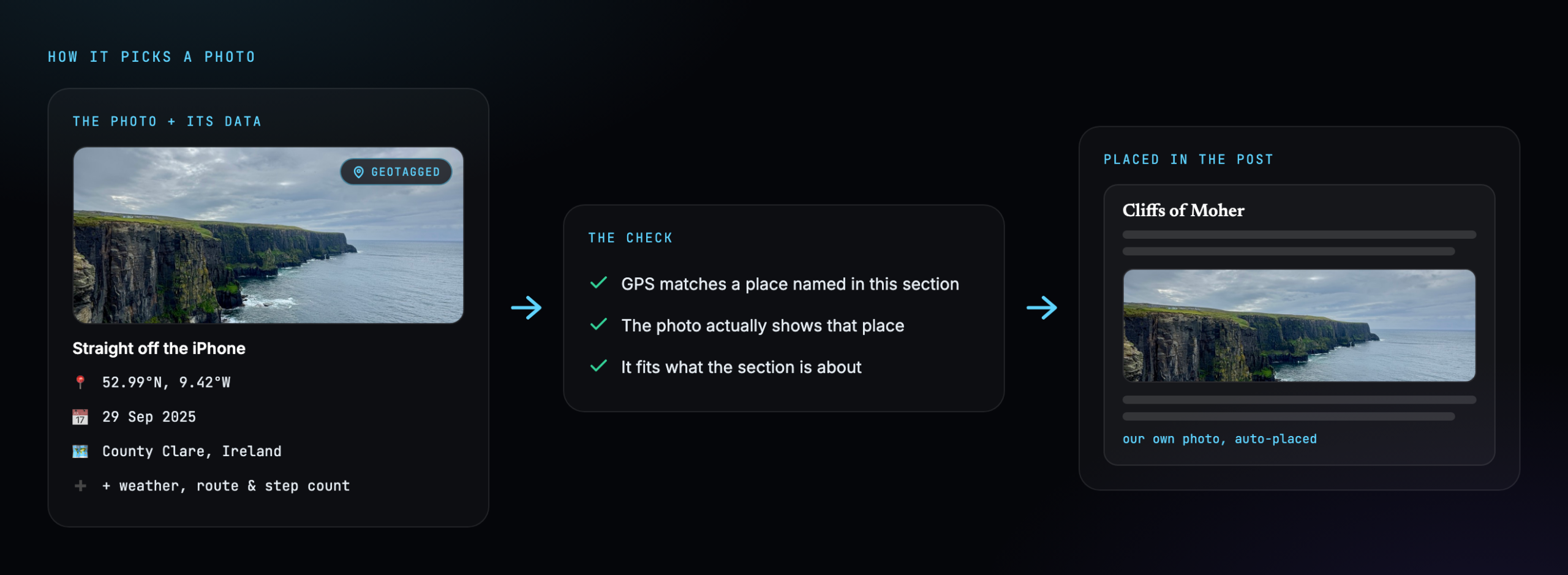
If a post mentions a specific pub, it checks whether we have actually been there, then looks at the photo to confirm it really is me in that pub and not some random interior, and only then uses it. When our own archive has nothing, it falls back to the site’s media library and free stock sites like Pixabay and Pexels, pulling a few candidates per section and comparing them before choosing. It will not settle for any photo of Ireland. It has to be the right photo for that exact section.

What it actually costs
Here is the math that made me sit back in my chair. A 5,000-word, fully optimized post used to take me at least eight hours, or $200 to $300 if we paid writers. The pipeline does it for about $2 to $3 in API credits, and my time is the 30-minute review.
The review pass is not optional. I read every post, fix facts, cut anything that does not sound like me, and add the personal details the machine could not know. That half hour is the difference between a real publication and an AI content farm, and I am not interested in running a content farm.
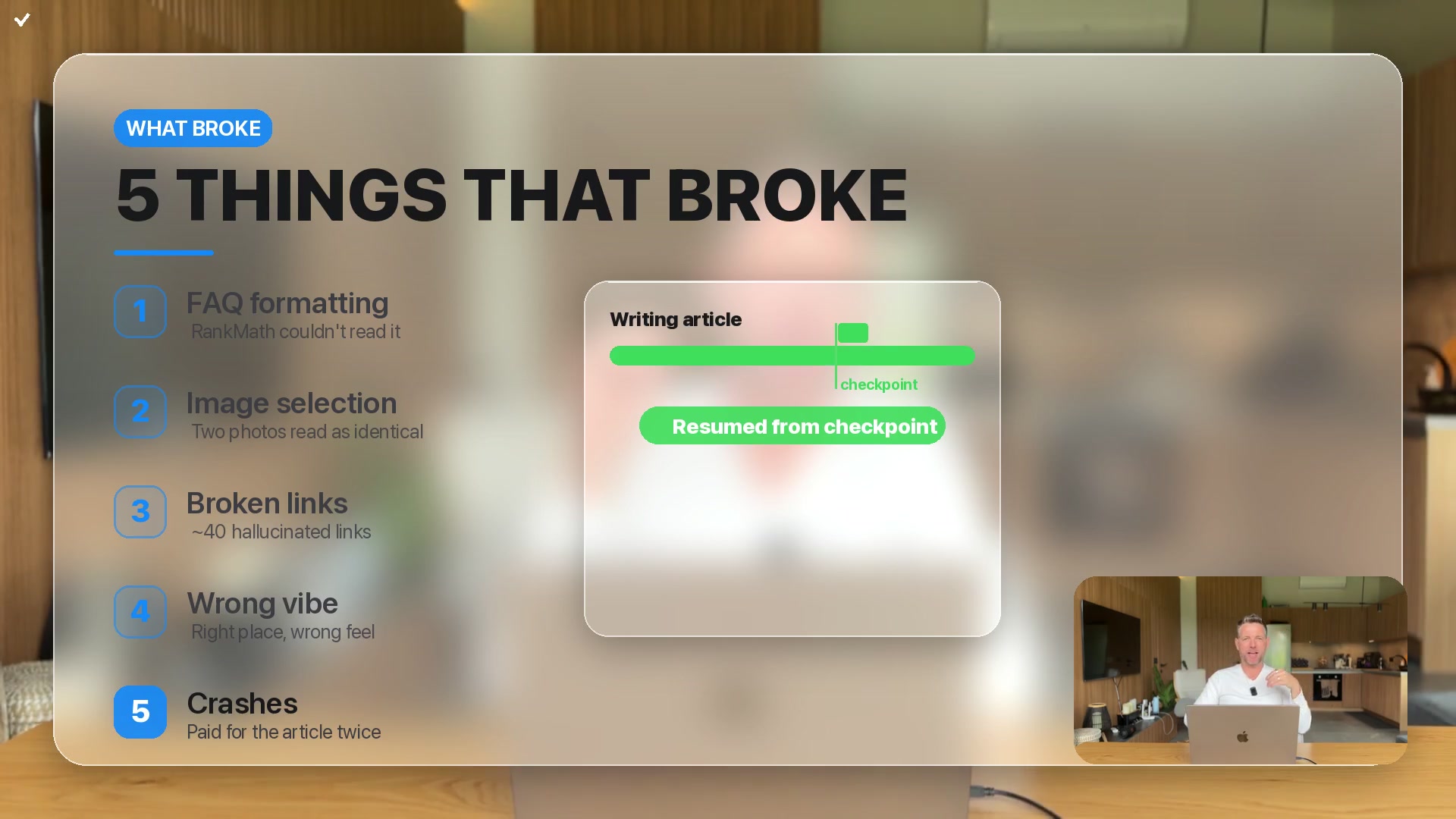
The five things that broke (so yours don’t have to)
Now the part most build stories skip. These five problems each looked small, and each one ate days. The pattern with AI errors, I have learned, is that they take far longer to find than to fix.
1. The FAQ markup Google couldn’t read
RankMath expects FAQ sections coded one specific way, and the AI kept producing markup that looked perfect on screen and was unreadable to Google underneath. It took six separate fixes on a single article before it held. The lesson stuck: on websites, looking right and being right are two different things.
2. The same photo, twice
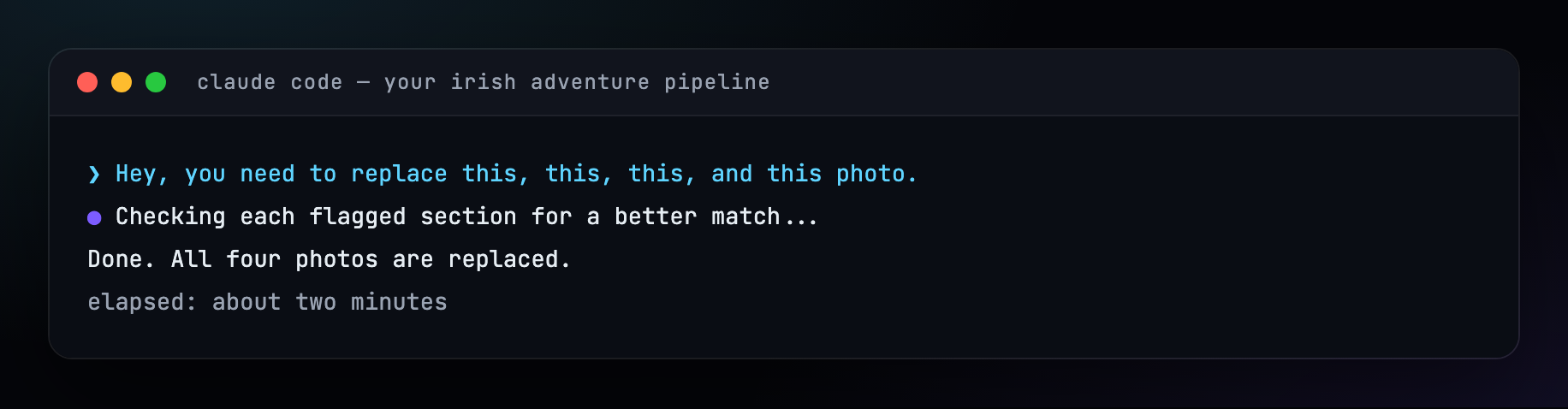
The image picker kept using one photo in two places, or picking a photo that matched a stray word in the section instead of the point of it. The workaround that mostly fixed it was forcing the tool to put two candidates side by side and choose. I still replace a few by hand, and the fastest fix is just telling it plainly:
3. Forty links to nowhere
The pipeline hallucinated about 40 links across 10 draft posts. Some pointed to articles on my own site that did not exist, and some pointed to outside pages that were never real. I caught them before anything went live, but only because I went looking. If you build one of these, audit every link before you trust it.
4. Right place, wrong vibe
Some photos passed every check, right country, right town, and still felt off, like a castle shot sitting in a section about a beach town. It was technically correct and actually wrong. The fix was adding a context check that asks whether the photo matches what the section is about, not just where it was taken.
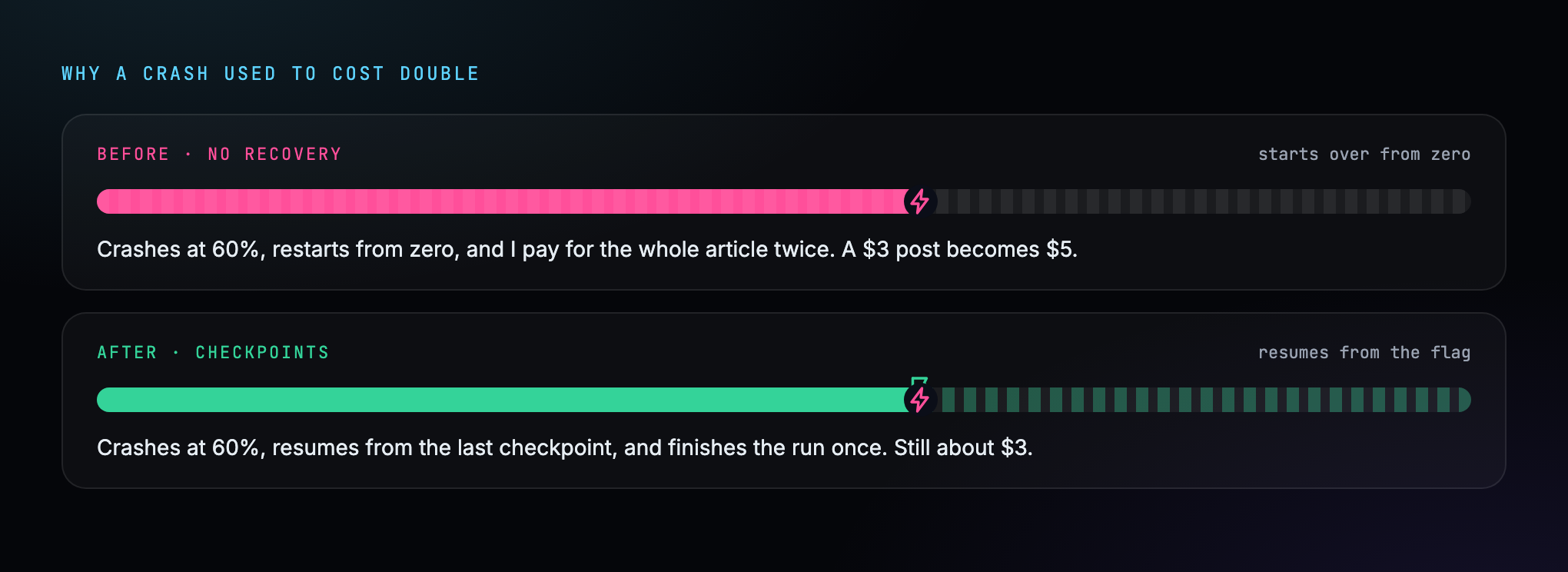
5. The crash that billed me twice
Early on, the pipeline would crash halfway through an article and start over from scratch, which meant paying for the same article twice. The fix was checkpoint logic, so a crashed run resumes where it stopped.
It also makes the stuff around the post
The pipeline does not stop at the words. Every run also generates two Pinterest pins from the best images, builds little route maps so readers can see where things sit, and fills out everything the RankMath plugin needs for a high SEO score. The pins come out branded and ready to schedule.

Train it like a new hire, not a vending machine
The mental model that finally made this click is that AI is a brand new employee. You would never hand a first-week hire your whole content operation and expect veteran output. You would train them, correct them, and write them ridiculously detailed SOPs. The pipeline needed exactly that, and it took days of going back and forth before the output got close to something I would publish.
Two habits saved me the most time. First, I put Claude Code into plan mode before any big build and make it think through the whole approach before it writes a line, which catches bad ideas while they are still cheap. Second, the hard part turned out to be the systems around the writing: sourcing the right images every time, structuring the article, publishing cleanly. Content at scale is a systems problem, and systems problems are slow but solvable.
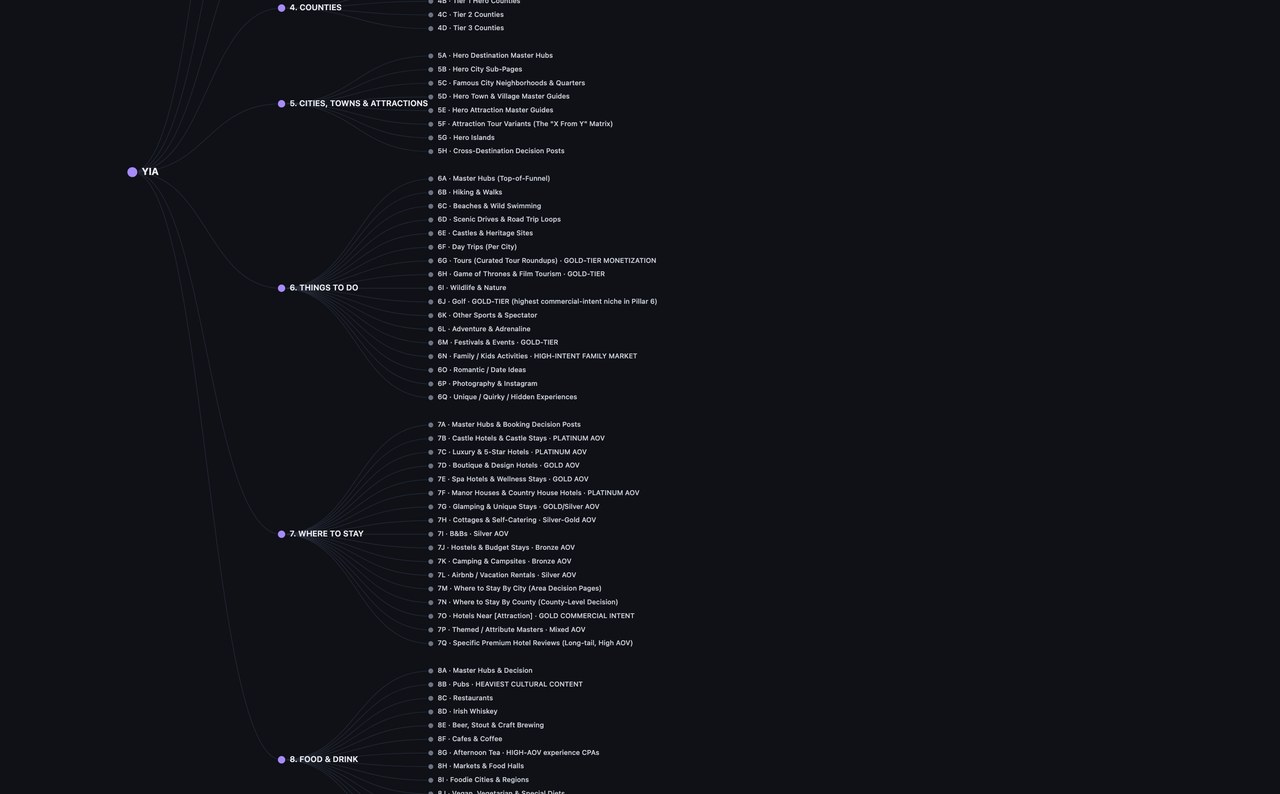
The structure work matters as much as the writing. The site had no consistent organization, some posts carried 15 tags and some had none, so I had Claude Code map the proper structure: 8 main categories, a controlled set of tags, and a pillar and silo linking plan covering every post. It even built me an interactive map of the whole thing.
Where this goes
The pipeline is set to run daily, with 10 to 15 new articles a week as the target. Since I started giving this site attention again, traffic is up about 30 to 35%, and I checked last year’s numbers, so it does not look seasonal. And no, this has not cost anyone a job. This site had zero writers and zero employees, and if the pipeline keeps improving I will be hiring two or three people for quality control who would never have been hired otherwise.
If you are a blogger staring at a dying traffic graph, my advice is to build the smallest version of this first: a topic picker, a researcher, and a writer that drafts to WordPress without publishing. Train it like a new hire, audit every link and photo it claims, and keep your hand on the Publish button. That is the whole system, and building it is the most fun I have had working in years.
Come along for the build
This blog is where I write all of it down, the wins and the stuff that blew up in my face, while I try to rebuild a business that AI knocked flat in 2023. The thumbnail app, this writing pipeline, the video editor I am building next, they are all the same bet: that a regular guy with no coding background can use this stuff to build real things worth owning. None of it is finished, and some of it might not work at all.
I am documenting the whole thing here as it happens, every build and every face plant, so if you want to watch me figure it out in public, this is the place. New posts land as the builds do. Come along for the ride.